Archive | Cultural travel RSS feed for this section

63 Islands of Efficiency

5 Jun

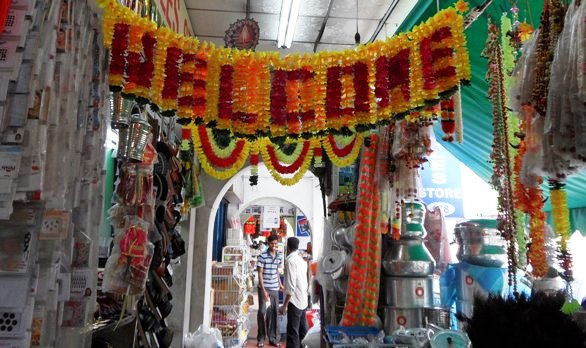
Welcome in flowers in Little India

From the moment I got off the plane I could see the signs of efficiency at every turn. At immigration, there were automated lines where Singaporean residents just swiped a card and a machine scanned their finger print. For foreigners there was a long bank of border control agents that issued visitor visas. Not a single line at any of them, I just walked-up handed over my passport and off I went. Sure beats the 2 hour immigration lines at US Airports. And then there was the big bold red letters on my tourist carrd – Warning Death for Drug Trafficers Under Singapore Law. A stinging reminder that this is a land that embraces judicial corporal punishment. There is no trial by jury and you are proven guilty before proven innocent. Singapore is thought to have the highest execution rate in the world. And you are reminded of these strict laws at every turn. $1,000 fine for riding your bike through a walking tunnel. $500 fine for littering on the street. Death for firearm offenses, murder, etc. The list goes on.

Despite this stark reality. Singapore is the world’s fourth largest financial center. It gives the vibe of intellect, progress, and accomplishment in every nuance. There are skyscrapes as far as the eye can see, and tropical rainforest trees and gardens are interlaced throughout a sea of glass and steel.
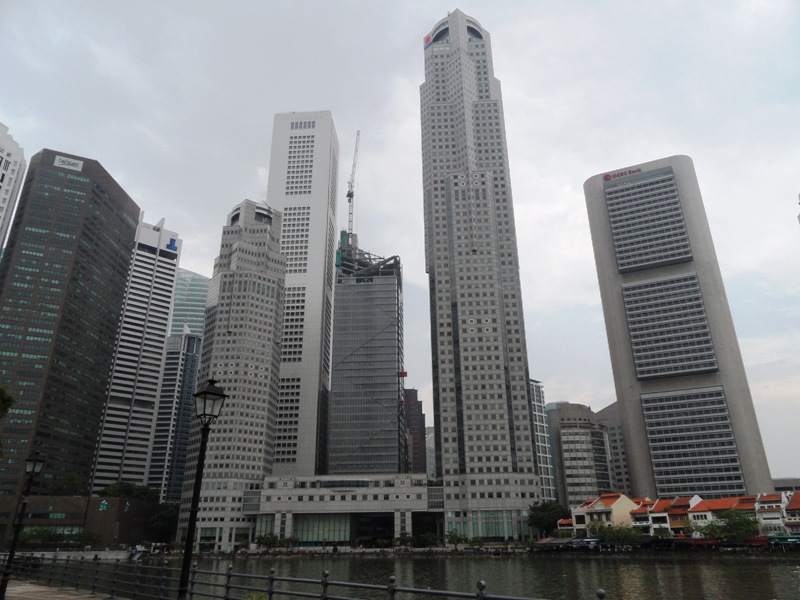
Singapore Skyscrapers

Along with the immense sense of economic development, vanity and wealth really is everywhere. Shopping malls are all around and filled with only the highest end European and American shops. Gucci. Yves Saint Laurent. Prada. Jimmy Choo. Such a sharp contrast from the rest of Southeast Asia that we’ll be exploring over the next two weeks.

It’s not just all about money and lack of individual freedom. There are also a million wonderful things about this island country made-up of 63 islands, totaling just 224 square miles. Singapore has mastered efficiency. You order a taxi on your mobile device and its at your door in under 5 minutes, no questions asked and no delays. Street access for cars during peak times is controlled by automated tolls controlled by microchips in every car. There are no homeless or shanty towns, the government subsidizes adequate housing for all Singaporeans regardless of income. There is no garbage. There are no rats. There are no cockroaches. None has or carries firearms – except the police of course. And a sense of personal safety is shared by all. These are all things I really appreciate about Singapore.

Its also a land of beautiful cutural fusion. Malays. Chinese. Indians. Europeans. Indonesians. Americans. Hindu. Christian. Muslim. Buddhist. They all call this home and many of them are ‘Singaporeans’. From my short time here is appears all ethnicities and religions coexist in harmony with one another. There does appear to be some class divisions based on ethnicity to a certain degree, but not absolute divisions.
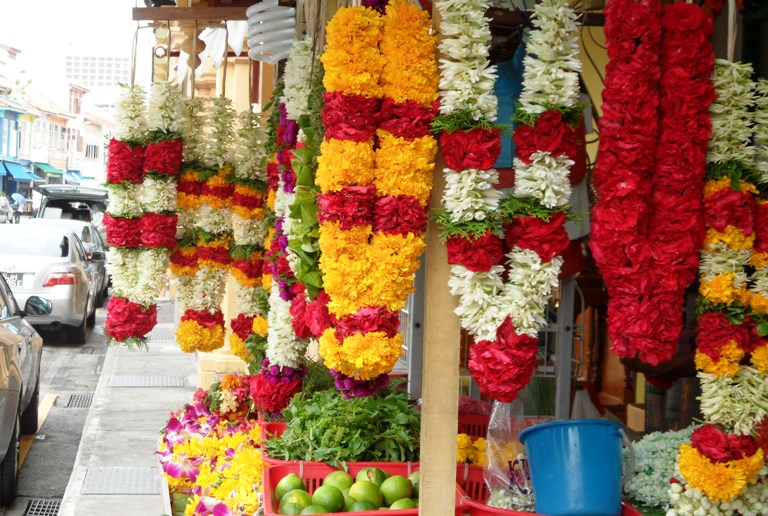
Flower necklaces in Little India

One of the areas of this island nation that I really loved was Little India. It was very authentic in terms of all food & decor Indian and Hindu. Except it was probably a million times cleaner than any Indian city and there was no sign of poverty anywhere. Vibrant flower neclaces hung at little carts along the narrow streets. The pungent aromas of Indian spices hung in the dense hot & humid air. Glimpses of glittery gold and beaded sarees adorned women at every turn. We walked on through the many bazaars. Then we came across a neat little area where a few women sat on plastic stools at tables with other women carefully painting detailed designs
on the skin of other Indian women. These women are henna artists. Their hands moved swiftly with a little henna pen that released a small amount of ink onto the skin, forming the designs of intricate flowers, mandalas, birds, and more. This is Little India in Singapore and I loved it.
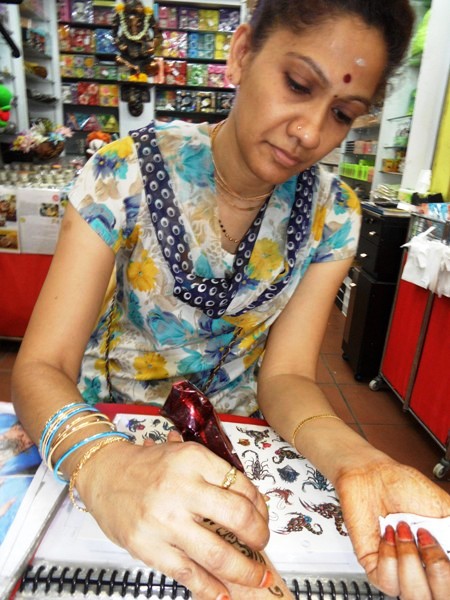
Henna artist in Little India

Moving on. Other cultures collide in this serendipitous landscape. I just happened to be in Singapore during the Dumpling festival. This is one of the local traditions that originates from the Chinese influence here. Its a typical street festival. With dancers, street performers, traditional music, and all the like. And of course lots of rice dumplings were sold all over the streets. The dumplings consist of rice sweetened with cane sugar or honey and stuffed with a myriad of meats, vegetables, nuts, and spices. They are bundled in banana leaves, tied with string, steamed, and hung out on long poles for sale in the streets. I tried a vegetable rice dumpling and it was delicious. Its basically an Asian version of a tamale. Then there are hawker stands everywhere that sell a variety of other asian dishes and fresh juices. I washed down the dumpling with some fresh pineapple-celery juice. Perfectly refreshing!
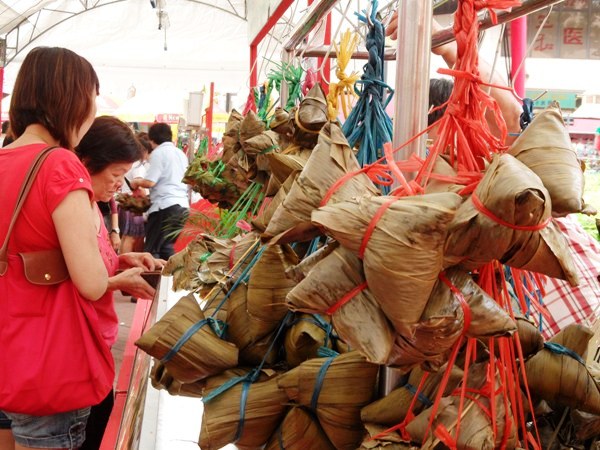
Rice Dumplings

Now on to the rest of Asia!
Airport Adventures

2 Jun

So here I am waiting *patiently* at Dulles International Airport about one hour outside of my home in Washington, DC. It’s been nearly a month since I’ve posted in this blog and I didn’t expect that this post was going to be about my “adventure” in the airport but so life goes.

I arrived here at 9:30am ready with my small backpack (no checked bags for this girl!) ready to board my flight to Tokyo, Japan. I went through security and headed onto my gate. As I was walking on I checked back at the flight status monitor and there I saw that dreaded notice next to my flight, in big red blinking letters ‘CANCELED’. My heart sank and all I could do was take a deep breath, and mentally prepare myself for those painful negotiations with the airline staff. Yup, indeed my flight was canceled. I jumped on the phone to call United and bolted out of my terminal an headed to ticketing/check-in. There was only one other flight to Tokyo today and it was overbooked, I didn’t have a shot. After 40 minutes on the phone and in line at the ticketing counter, the very gracious representative got me on one of the last seats on that flight and told me to sprint to the counter. And indeed I sprinted over with my bag on and all. I got there only to find out they had ‘closed’ the flight and could not get me on – no matter no how it just wasn’t going to happen. So I sprinted back to the United ticketing counter to see what could be done. Patiently I waited in line again… There was only one more
flight out that could get me to Singapore and it leaves at 10:00pm (it was 12:00pm at this point). I didn’t have a choice, it was 10:00pm or nothing at all. So I took the new flight.

I know so many of you have had a similar terrible travel experience. We’ve all had cancelled flights, missed connections, staying over night etc. But for me this one just about took the cake. I suppose there is a reason for everything.

With that I had to come up with some way to find adventure (or just fun) in these 10 hours at Dulles airport. Oh and without a computer, I actually left my computer home for the first time ever and am writing this via my iPhone. I contemplated going home and then coming back but a taxi each way is $120 and I’d get stuck in rush hour traffic on my way back. So my ‘airport adventure’ plan of the day:
1. Carefully review the airport’s Shop & Dine map
2. Choose a gate (Dulles has physically separate gates)
3. Review the menus at every single sit-down restaurant in the gate area (I don’t do fast food unless absolutely necessary)
4. Select best restaurant option for lunch (it was almost 1:30 by this time)
5. Enjoy lunch
6. Walk laps around the gate as a post-meal ‘digestion’ walk
7. Pretend I am a spy and follow someone that looks like they will be here for a while too
8. Visit the massage bar for a 15 minute massage
9. Go to the bookstore to check out the new releases
10. Try to find an Internet kiosk that has computers
11. Head to next gate to explore
12. Walk laps at next gate to assess all options and then check out all the gadget shops
13. Check email again
14. Visit the nail salon at gate D (although I never get manicures cause they are destroyed in less than 24 hours)
15. Walk laps around gates C and D
16. Assess all restaurants in gates C and D
17. Choose a restaurant for dinner – eat a light dinner and glass of wine
18. Go to magazine shop and buy trashy mags for flight (I’ve already got my good news mags in my bag)
19. Now it SHOULD be time for boarding!

If you were stuck at the airport for 10 hours what would you do? Share a comment, I’d love your ideas! I still have another 7 hours!

Now I promise you that my next post will be a lot more fun and exciting than this one. But I suppose this is just a daily reality of one of the very unglorified aspects of traveling. Look forward to reporting from Singapore next! Bon voyage!

Gratitude to the Turks

8 May

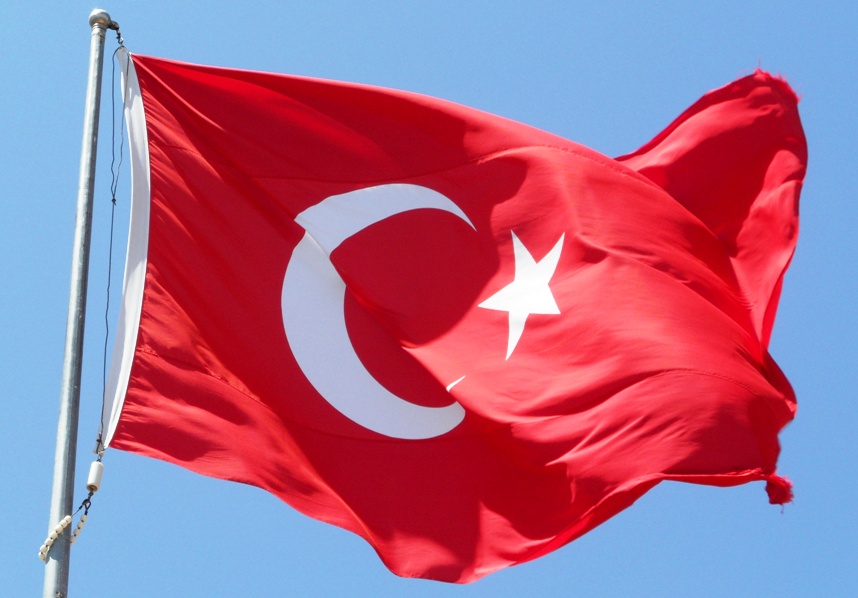
Color photo of the Turkish flag in the wind.

I write this as I cruise at 32,000 feet for over 10 hours.  This is my last Turkey post for a little while; though I’m certain I’ll revisit some other stories of these adventures in future writings.  Where to begin?  The past 10 days have brought forth such wonderful and rich experiences.  Turkey really is the most culturally vibrant culture and land in all of Europe.  I’ve seen; touched; tasted; smelled; and felt a lot of what Turkey’s Antalya region has to offer.  I also had a highly productive and motivating week working with some of the most prolific thinkers in my field.  So many relationships formed that opened doors for collaboration and partnership with individuals and institutions around the world.  So let me start by saying that I am grateful to have had the opportunity to live this experience, to fully live these days of my life.

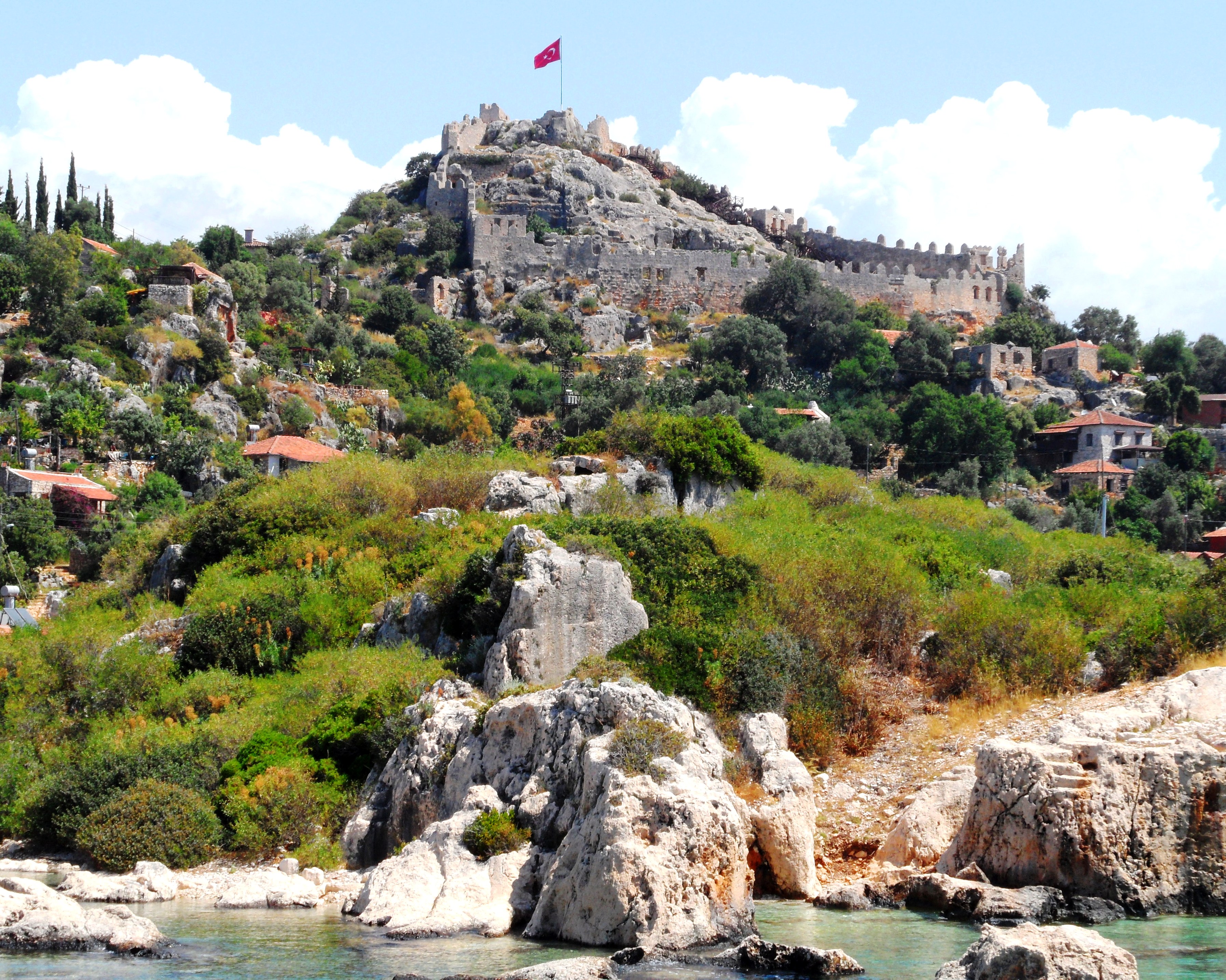
Color photo of a hillside castle on a small island.

The conference I participated in this week involved one-full day that was dedicated to a technical tour.  Turkey holds some of the most ancient history of humanity on our planet.  This means it has also witnessed the rise and fall of many great civilizations – Greeks, Rhodesians, Romans, and beyond.  Yet, so much remains unknown about their successes and failures that ultimately resulted in their demise.  It is a land where ancient mythology, fables, fairytales, and a pinch of fact are all tossed together.  And when you are within this mysterious and breathtaking landscape you can’t help but ask the question, what secrets and lessons would the people from these ancient civilizations want us to know?  Our world is experiencing a tremendous boom in conflict and in change, taking on so many different forms.  Violent wars, drought & famine, loud voices echoed millions demanding freedom & human rights, and violently oppressive regimes resisting justice – and a surge in some of the perilous natural disasters we have experienced in modern history.  I simply can’t go on writing without raising the question to all of us – What can we learn from our ancient ancestors that can allow our humanity to rise out of this complex & pervasive turmoil?  What wisdom can be learn from them that will prevent our modern civilization from falling?

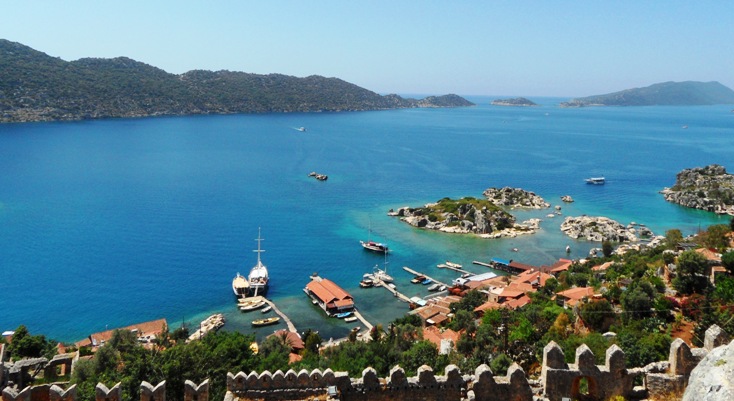
I don’t know if any one of us can fully answer these difficult questions.  But as a community we must begin to tackle them for our own survival – and to nurture a better world for future generations.  So what does this have to do with Turkey?  Well, I’d like to share the story of one place that we visited on the technical tour, the sunken city of Kekova.  Nestled along the edge of a coastal island that pours into the Mediterranean Sea is the City of Kekova.  Much remains unknown about the history of the people and this island city.  It is an ancient Roman city that likely had pre-Roman origins.  However so much of the city is sunken beneath the turquoise blue Mediterranean Sea, artifacts and architecture corroded by the salty sea water, that much of its history remains a mystery.  What is known is that Kekova experienced an earthquake at some point during the Roman era, and half of the city literally fell in the ocean.  The edge of the island is characterized by old stone walls and stairs leading into the Sea.  Under the water you can see ancient building structures – columns, walls, archways.  The structure of the stone walls and placement of the stairs suggests that these are the remnants of homes to people long forgotten.  The earthquake that occurred in the city of Kekova essentially brought about the end of one large Roman city.  I try but I can’t quite hear the spirits of these lost people.

Color photo of the Mediterranean Sea and a grouping of islands

Continuing on we also visited another island that illustrates layers upon layers of history.  It is home to a vast area of ancient sarcophaguses, a castle from both the Roman era & Middle Ages that was later used by the Ottomans, and a modern island village.  I spent a few hours wandering around this island experiencing the old and new with a couple of my colleagues.  One of them was a Turk with deep knowledge of Turkey’s ancient history and mythology.  We entered the village by foot, walking up narrow staircase from the sea, as there are no roads in these little island villages.  As we reached the summit ridge of the island we found ourselves amongst a vast panorama of ancient sarcophaguses from the Hellenistic and Roman eras.  There they were, still standing above the earth along the summit ridge, reaching for the heavens.  These sarcophaguses are stone containers that the ancient civilizations built to place the remains of the deceased.  An intriguing little legend I learned along the way is that these ancient containers were carefully designed to look like upside down boats.  Legend has it that these civilizations believed that the apocalypse would come in some distant time in the form of a major flood.  And when it came, the sarcophaguses would simply sail out into the Sea where they would be protected in the stone encasings and still be close to God.  Little did the people know that pirates would come later and break through the stone containers that protected the spirits of their deceased, searching for jewelry and other valuable objects.

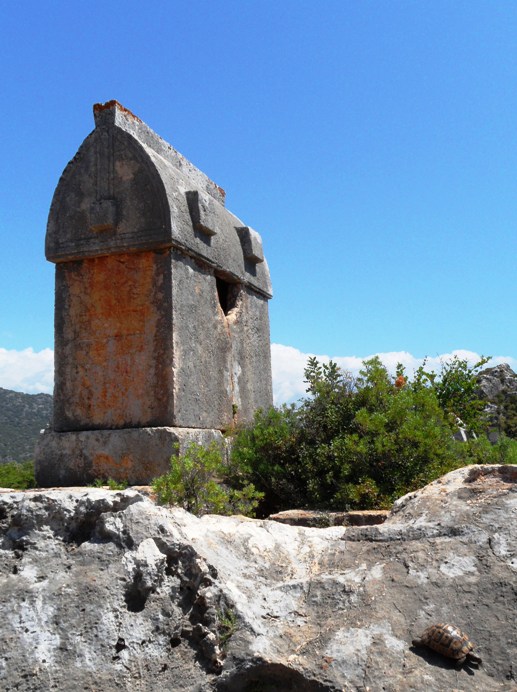
Color photo of ancient Roman ruins

What a fascinating legend!  As I walked on I came across one incredible sarcophagus near to a large boulder.  On the boulder there was a brown land tortoise basking in the warm sun.  Could it be the reincarnate spirit of whoever was once ‘buried’ in this ancient boat-like stone container?  I will never know, but I did enjoy a few moments sharing a seat with the tortoise as we both admired a breathtaking panorama of Kekova and beyond.

Color photo of the land tortoise overlooking a Sea view

I am so grateful for having had met and talked with people willing to share with me the ancient legends of this rich land.  I am grateful for the opportunity to have lived these days here.   So many questions.  So many possibilities.  My time in Turkey has come to an end.  And I am ready to go home to my family and my work.  This provocative landscape will forever be in heart.  It has brought me a deeper perspective of the challenges that I have dedicated by life to addressing.  And beyond these challenges, it has breathed a little bit of a new life and culture into my soul.  I am grateful for all Turkey has taught me – it’s wonderful people, history, spirituality, myth & legend, fresh & clean cuisine, and powerful new ideas.  Teşekkür ederim!

Turkish Iskender Delight

7 May

I promised all of my meat loving friends that I would explore how the Turks make meat divine.  It took me nearly the entire trip here to give it my attention, and well I am glad that I did.  This morning I had the final conference sessions, and as soon as they got out off I went wandering the streets of Antalya.  I wove through all of the downtown neihborhoods and found that they come to life on the weekend.  The parks were filled with Turks of all ages doing everything you can think of -skateboarding, playing backgammon, napping on the grass, biking, playing music, drinking tea from little tulip shaped glasses, and cooking kebab on small charcoal grills.

The streets were equally alive.  Saturday is shopping day for most and Antalya has a myriad of large bazaars selling cloths, spices, textiles, jewelry, shoemakers – you name it, they have a shop for it.  Some shops are nothing more than a table with a bunch of trinkets sprawled out.  Others are groupings of little one room shops and traditional restaurants are intermingled in this sea of micro-commerce.  Many of the shops are run by families, which to me is very neat.  I also found a small narrow street that consisted of 10 or so little enclosed booths.  They served as the workshops and storefronts for Antalya’s shoemakers.  I’ve never seen so many shoemakers, all producing shoes on customer order only.  You visit one of the shoemakers and tell him what kind of shoes you want, and he goes to work making your shoes.  Carefully cutting the leather, stitching the sole to the show, sewing on appliques.  I like the idea of bringing back these types of micro-enterprises and trades.

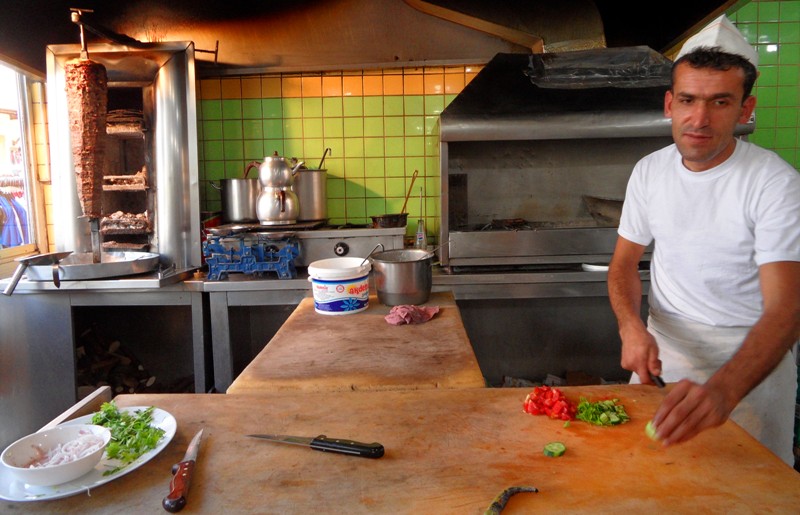
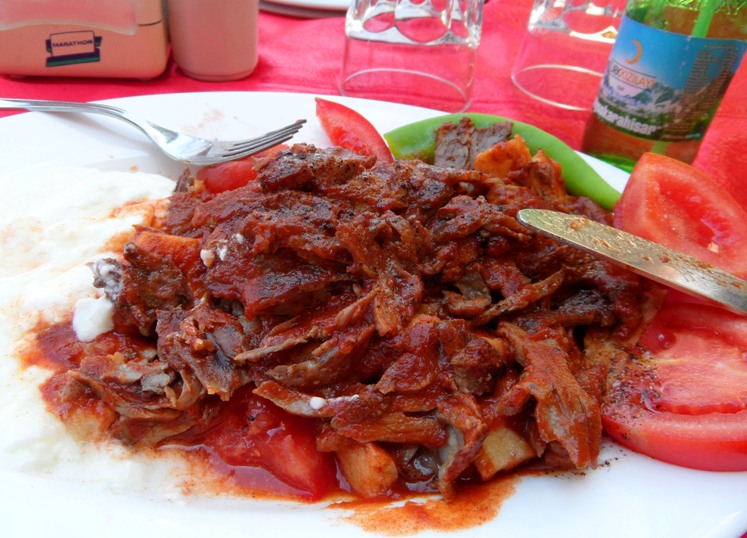
Now onto today’s foodie experience.  After a few of hours weaving around the sunny streets of Antalya I found an area where there were several traditional kebab restaurants.  The doner kabab meat rotates on a large vertical cooking device, it continually cooks over low heat  that brings to life the aromatics of the spices laced within the meat & natural juices.  This seemed like the perfect opportunity to give Turkish meat a try – and I am glad I did.  All of the restaurants in this area were filled only with local Turks, so I put my bet that this would be one of the best places.  I took a seat at a table outside, dining al fresco is the best way to go in Antalya.  The waiter kindly gave me the menu, all in Turkish yet again! But this time the Turkish names & descriptions were accompanied by photographs of each dish.  This was most helpful.  I gave my broken Turkish a whirl and placed my order with the waiter.   Here you have to order using portion sizes in grams.  Given how large servings here are, I went for the small portion (100 grams).  And out it came 20 minutes later – a heaping plate of what I call Turkish Iskender Delight.   Thin slices of the doner kebab meat cooked in an aromatic sauce of tomatoes, onions, and spices.  Served up on a bed of cubed pita bread, all the saucy doner kebab meat drenched the pita cubes with its delicious juice.  It was served with four thick slices of sweet tomatoes, a big spoonful of natural plain yogurt, and one fresh hot pepper.  The meat was so flavorful and juicy.  The yogurt gave the dish a cooling sensation to balance the crisp hot pepper pieces I ate with each bite of donor kebab meat.  I was also divine – like most all food in Turkey so far.  After I finished my meal, I went inside and spoke with the chef for a few minutes.  He was busy chopping up fresh herbs and cucumber.  I do believe this meal of Turkish Iskender Delight was cooked with love!

Color photo of a plate of Turkish Iskender Delight

My only “complaint” – even the small portion was too big for one person.  An hour after this wonderous foodie experience I went for a 5k run along the Mediterranean Sea!  Now back to eating fresh & clean.

Turkish Nuances

4 May

I’ve been in Turkey for 5 full days now.  And I am happy to say that I have 5 more days remaining here – except that I will be busy working most of the time, which has also proved very inspiring.  But this blog is about traveling and life, not about my work.  So back to Turkey and all its wonderous peculiarities!

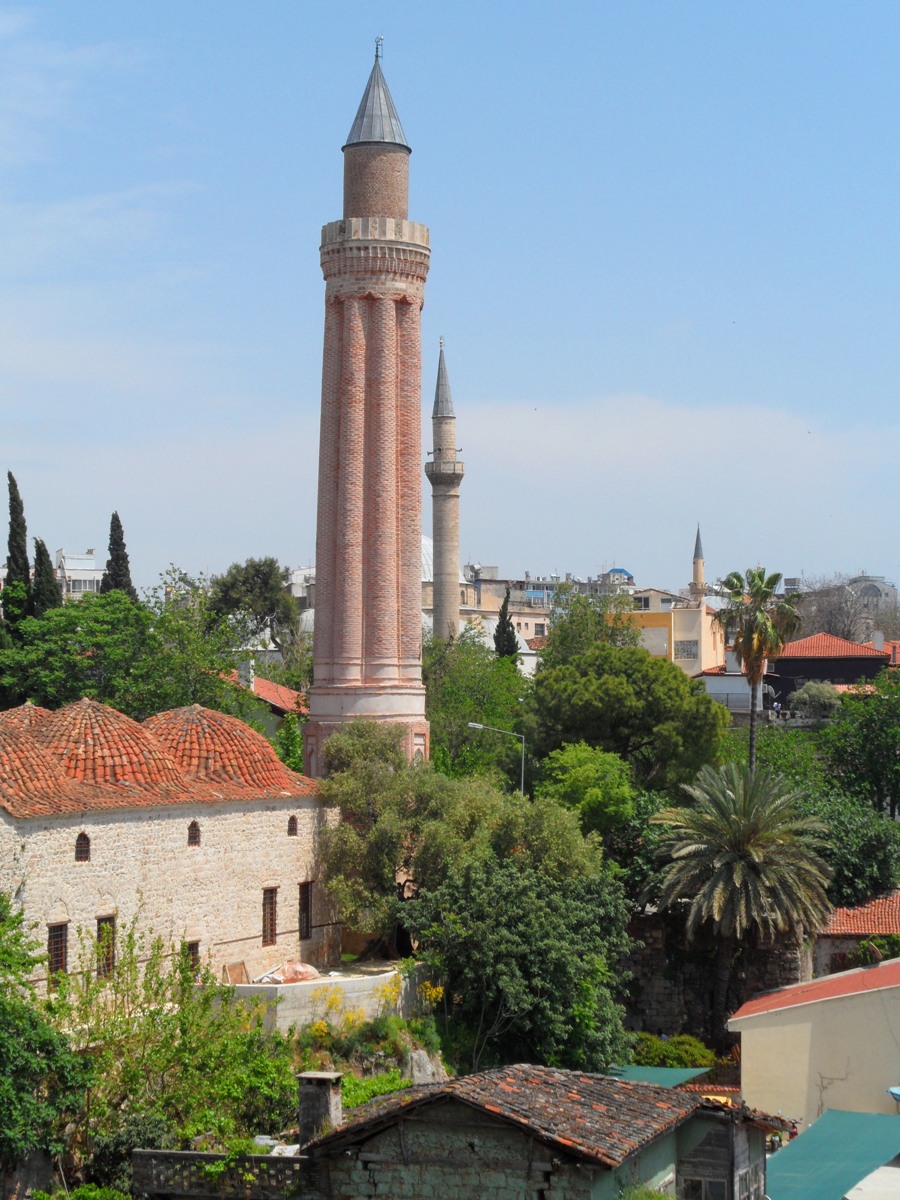
I’ve established a kind of daily routine here that I really enjoy.  I woke-up around 5:30am and spent some time catching-up on email and then headed out for a sunrise run.  It felt so good to jog along the Mediterranean Sea at sunrise, looking out at the mist hanging above the water and a few distant sailboats on the horizon.  The roads near my hotel are ancient, from the Roman Era, and I pass the ruins of an old Mosque from the Middle ages before heading down to the edge of the Sea.  Then there is another ancient Mosque from the 13th Century CE – it is a beautiful house of devotion even with all its signs of age and simplicity.  The minaret (the large tower where the 5 daily prayers are announced daily) was made of old stone and had a beautiful scalloped structure.  The domes of the mosque’s main building were made with a terra cotta roof.  Simple really is beautiful.  From one outlook you can see this mosque and the towering minarets of 2 other mosques in the distance.  It is a profound view.

Color photo of skyline in Analya Turkey

All of the roads are really just for pedestrians here, which suited me perfectly.  I jogged along a nice road along the Coast that runs through a very large tree covered park next to the regional soccer stadium.  I enjoyed passing by all the locals, mostly proprietors of little shops opening up for the day.  I’ve been practicing my Turkish every free moment I get, which is not much, but now I am comfortable with the basic phrases.  It is customary here to say hello and good morning to everyone you see – strangers and all.  And I LOVE this about Turkish culture.  It was one of the things I learned, and loved, when living in Costa Rica.  Except here you say “Salam” which is the equivalent for “hello” – except that is actually means “Peace be with you”.  What a wonderful salutation!  I do think the world would be a better place simply if we all greeted each other with such kind words.  It would be such a simple part of our daily lives that I think would change our outlook on life and others.  And in these morning jogs and walks I’ve picked-up this cultural nuance and ensure I give my respectable greetings.  With that, i’ve been surprised at how respectable men are to women here, and how well I am treated.  But I’ll share more on that in my next blog.  All this was just great food for thought to start the morning!

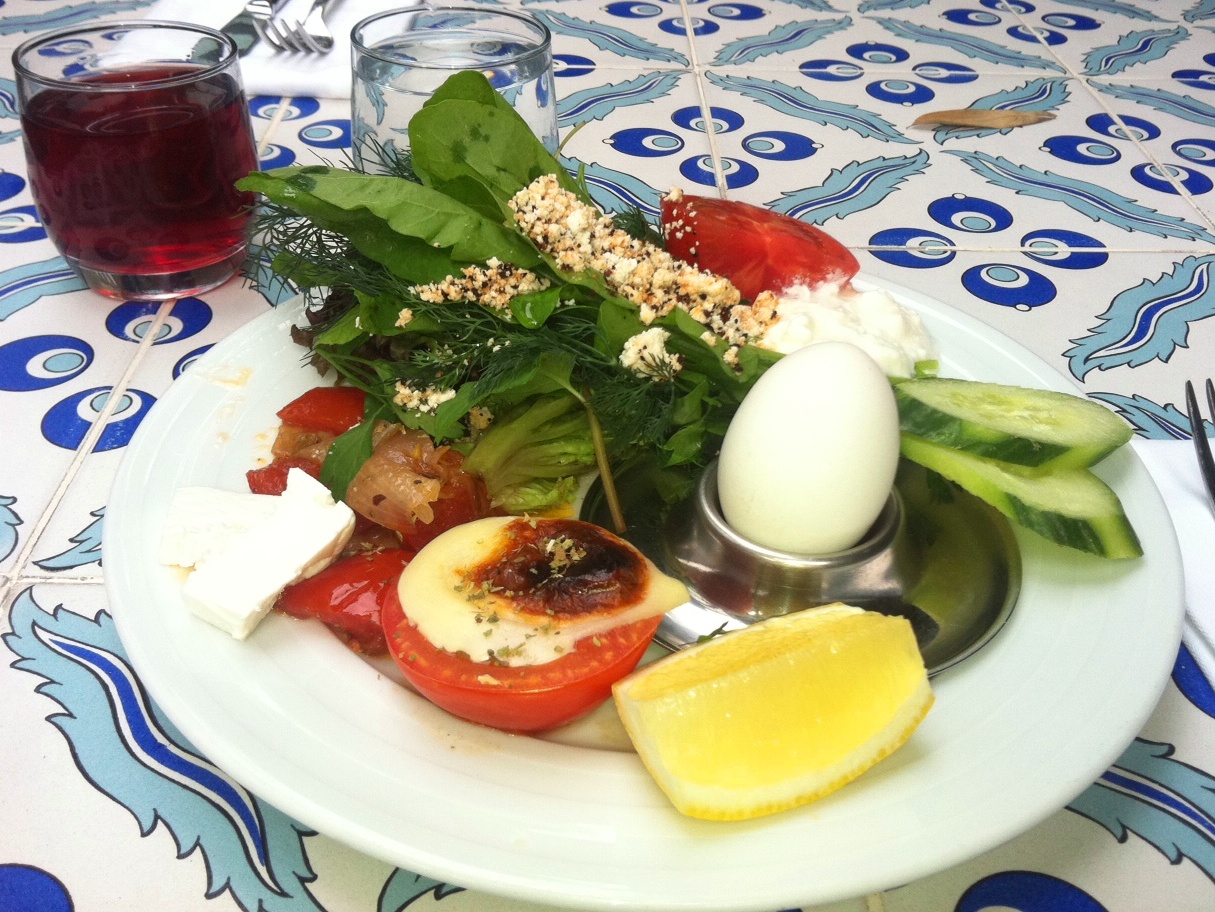
Then there was a delightful foodie experience this morning.  Breakfast.  When I got back to the hotel breakfast was just about ready.  It is buffet style – as the Turks love buffets!  I’ve befriended the chef at the hotel restaurant and he has graciously educated me on Turkish cuisine, how the dishes are cooked and which spices to use for what, etc.  This morning the buffet included bowels of fresh herbs and a variety of greens that looked so fresh I couldn’t resist – red leaf lettuce, rocket, lemon arugula, fresh dill, mint & parsley.  It’s a salad kind of morning!  And there I created a masterpiece.  A tower of vibrant leafy greens topped with aromatic spices, crumbled feta, and fresh lemon squeezed lemon.  All this paired with a hard boiled egg, fresh cucumber slices, a dollop of natural yogurt, and fresh tomatoes of course.  My whole body felt good after this clean and hearty breakfast.  I want to start having salad breakfasts a couple days a week.  If you haven’t tried a salad breakfast like this before, it’s not too late to give it a try.  And with summer just around the corner, tis the season to grow all these delicious greens and fresh veggies.  Add a little protein and you’ll have an energy packed day.  A lot of people wonder where I get my energy from, well I think God blessed me with a little extra energy but I also try to feed that energy with things like fresh greens and clean foods.  Now I’m not always fresh and clean like this but most of the time it works out.  Now if this breakfast, doesn’t make your mouth water I don’t know what to say. Bon Apettit!

Color photo of a Turkish Breakfast

Bounty from Land to Sea

2 May

color photo of three yellow lemons

Cirali, Turkey –

Since this is going to be my first post really dedicated to food I need to give you some background on what exactly food represents to me.  Well it means a lot of things and to me at the essence of life – food is the heart.   I love the sense of community around food and the ceremony of eating.  I love family dinner.  I love brunch and lunch with friends.  I love the good conversations that manifests between my husband and I over a good dinner.  Even more, I love cooking good food, and I love it when I can share my food with other people.  Food is a really simple way to bring people together.  All this does not have to come from gourmet shops or five star restaurants – but sure those are good every now and then.  If anything those gourmet places somehow make you so much more conscious of what you are eating and how you are eating, which is a practice that should be a part of our daily life anyways.  These feelings, and passions, I have for food – well they can kind of be related to a love story.  And I realize that I am not the first person to have such a love for food, it’s been a part of who we are as humans for thousands of years.  I guess I am just fessing up to my love affair with food.  While most people attempt to tame their feelings, I guess I am just putting my feelings on the table for you. (No pun intended!)

Enough of my love for food for a few moments… Let’s talk about my deepest passion in life.  Farming.  Yes, I am a Washingtonian, living in a cement jungle and I love farming.  Nothing is better to me than the cathartic feeling that one experiences when working with the Earth.  The dirty sweat that pours down my face and into my eyes, and the salty taste when it hits my lips.  It’s the best feeling of truly hard & good work.  I feel such a deep sense of worthiness when I plant seeds in a vegetable garden, care for the mango trees, turn the stinky compost, give the ducks grain & love, harvest the tomatoes, and milk the goats.  I’ve always held the connection between the farm, the Earth, and my food.  I like to know that there is someone with an equal love for God’s bounty nurturing the food on my table – which is probably why I’ve been a champion for “organic agriculture” since I was 13-14 years old.  Yes, I did know what organic was then and I even (however ‘annoying’ it was) insisted on educating my parents about organic agriculture, mad cow disease before the outbreak occurred, health implications of persistent organic compounds found in conventionally grown produce, and everything related in-between.  I guess this whole farming thing – working the land, connecting with the earth, living sustainably for future generation – is just a big part of who I am.

So, what does all this have to do with Turkey and traveling?  Well it’s the preface for how I will share with you my foodie experiences in this blog.  And the past few days in Turkey have served as a prime opportunity to give you my initial Turkey Food Panorama.

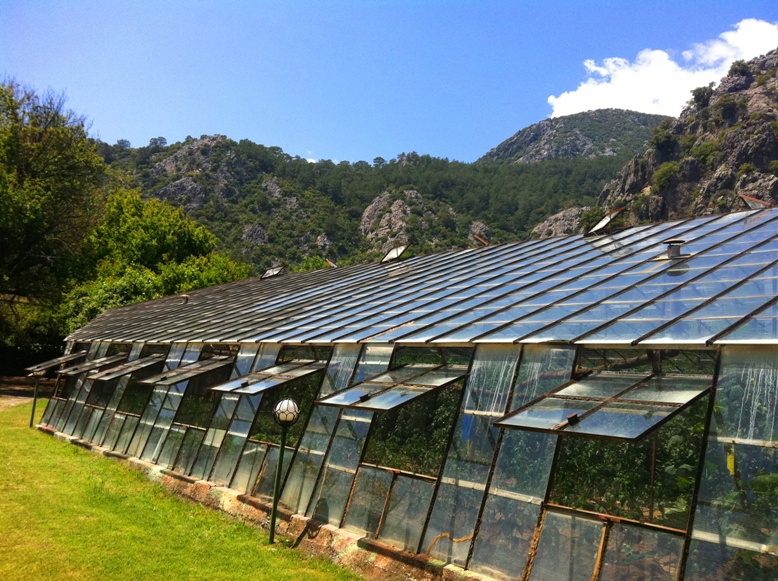
Color photo of greenhouse filled with veggies

I’ve been so impressed by the Turkish customs & culture around food and farming.  In every restaurant there are many dishes prepared only with fresh vegetables and many options perfectly suited for flexible vegetarians (I’m not talking about Vegans here).  I’m also astounded at how ‘victory’ gardens are a de facto cultural norm here.  Everyone with a piece of land has a vegetable garden.  I see baby aubergine (eggplants) growing on little strips of Earth near parking lots.  I see large pots (often old buckets & milk cartons reused) filled with soil where tomatoes, cucumbers & mint explode with life.  And in the country side, nearly everyone has a small greenhouses filled with an abundance of fresh veggies – some greenhouses are made with clear plastic sheeting while others are glass structures.  Many people also have a few goats or a cow for milk production – yogurt & fresh cheese are staples in the Turkish diet.  On my journey so far, I’ve explored this custom quite a bit in talking with locals – in my very broken Turkish and all!  They’ve shared with me that they too love fresh food.  And that organic agriculture is simply just “how it is done” in Turkey.  They don’t want to dirty their streams, rivers, & ocean with pesticides and the like.  They know the implications of such contamination, and so they are organic.  They didn’t have to become organic.  Now I don’t want to give you a false impression here – I am simply talking about the same household gardens, I am not talking about any commercial agriculture in Turkey.

What have all these fresh veggies and little gardens meant for me?  Well I’ve wanted to taste and savor them all!  Through this food journey in Turkey, I’ve reunited with the vegetarian in me.  I don’t know if I’ll ever revert to being a loyal and stubborn vegetarian again, but I’m thinking I just may work to focus on living a largely vegetarian lifestyle that still allows for cultural flexibility.  I love the ripe plump juicy tomatoes I eat 3 times a day here.  I love the fresh mint & arugula in my salad.  I love the stuffed eggplant.  And did I mention how amazing the cheeses are?  And the apricot preserves. And the fresh pomegranate juice.  Then there are the lemon groves that dotted the coastline in Cirali.  Well they are magnificent.  And their blossoms are intoxicating.  I also loved the fresh plentiful fresh lemon wedges served with all of my salads and fish.  They are all divine! These are the foods of the ancient Greek & Roman Gods for sure!  Now, I don’t want to turn off my meat loving friend vis-à-vis this blog, so as a fair heads-up I will talk about the meat dishes in a future blog.  Bet let’s stick with my food experience thus far.

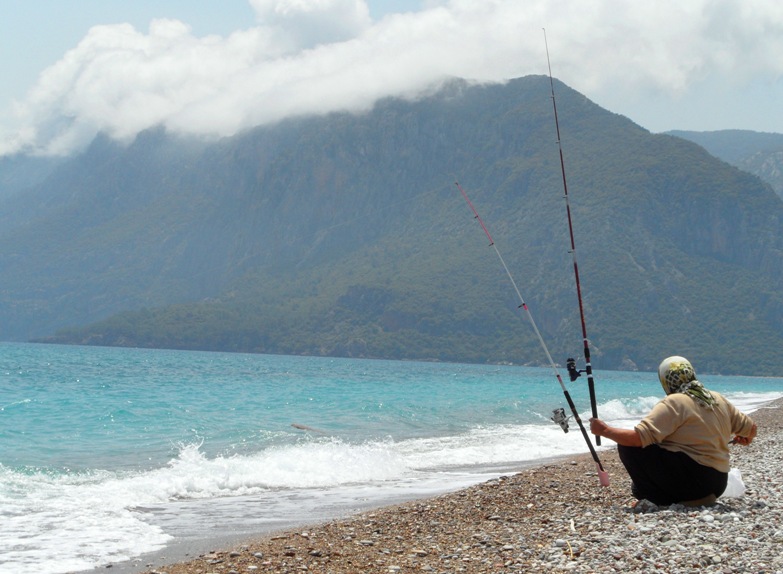
I love fresh fish.  And it’s the only “meat”, besides eggs, that I have eaten here.  Then today, I experienced something almost magical, but really it was just daily life in Turkey.  I was relaxing on the beach, taking in my last few hours bathing in the Mediterranean and sunshine.  An older woman, maybe in her early to late 70s, came down to the edge of the water about 8 feet away from me.  She was wearing sandals, long pants, a flowery head scarf, and had a plastic bag in-hand.  She kneeled down into the pebbly shoreline and unpacked her bag – 2 fishing poles and a sealed container with her bait.  She carefully set-up her fishing poles, baited the hooks, and with great finesse cast them into the sea.  She (and I from a distance) keenly watched the tip of the poles for any indication of a fish making move.  It was really beautiful watching her fish.  I hoped that the fish I had eaten had been caught with such care and love.  After about 20 minutes, a man and woman with their two young children came down to the sea.  They all sat down around the old woman and were talking.  The woman, I believed it was her daughter, was talking to the old woman with kindness and sincerity.  I saw sadness come over the old woman’s face, and two tears fell from her left eye.  The younger woman gently touched the side of the old woman’s face and her thumb rolled over the crevice under her eye lightly drying the tears.  It was a very endearing and powerful moment.  It reminded me of how similar life is no matter how different our cultures and history may be.  I don’t know what happened exactly but they all continued to talk while the old woman fished.  The conversation got more spirited and light; the young girl (about 2 years old) was laughing and throwing pebbles into the sea.  I think the little girl’s young & vibrant spirit somehow reminded the old woman that everything would be okay, and gave her a purpose to keep on fishing.

woman fishing on the edge of the sea

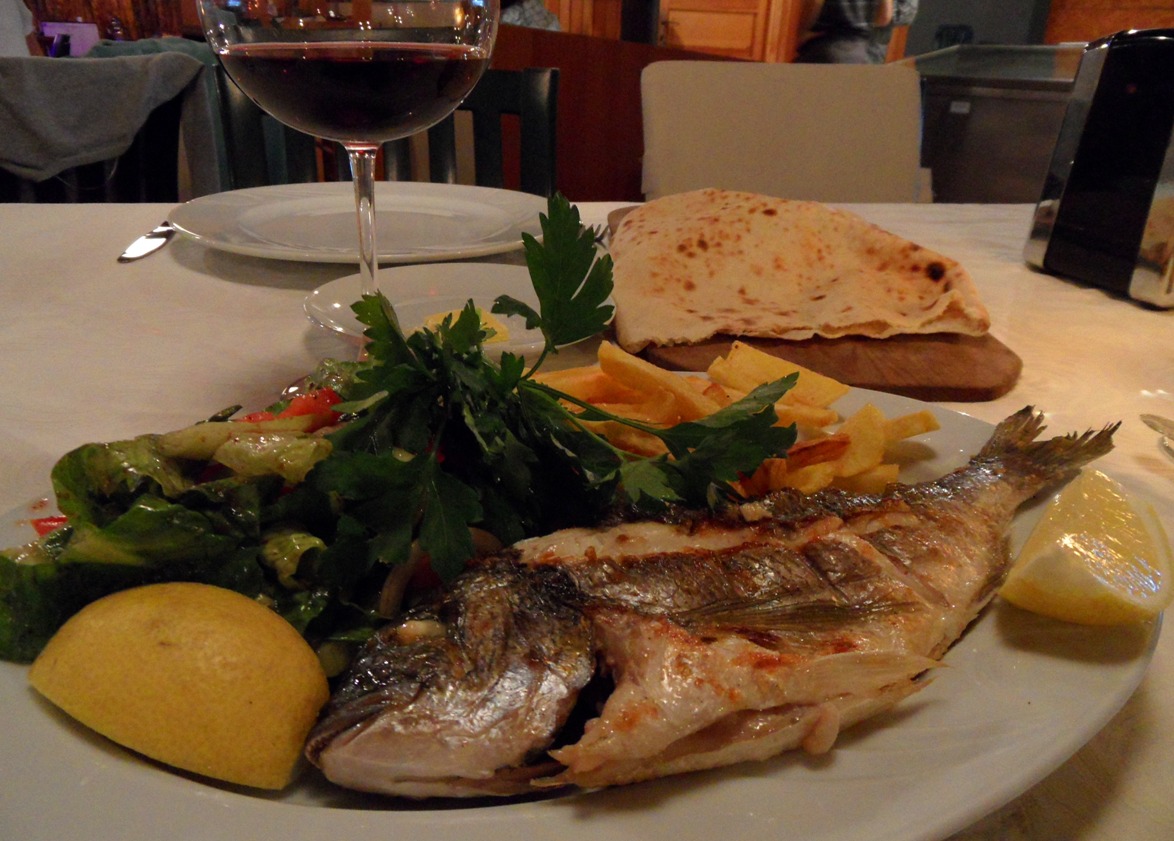
Later on in the evening I enjoyed a delicious dinner of grilled Sea Bream.  When I inquired to the waiter about what type of fresh fish they have, he insisted that they have many.  And that led to me getting invited to go to the kitchen.  The waiter showed me the chilled box of fish and I got to choose my own fish for dinner.  And to top it off I got to see ‘inside’ a traditional Turkish kitchen which is very cool.  Now choosing my fish is not as good as eating the fish that you catch, but it was close and just a fun part of this foodie experience.  The chef rubbed some spices and sea salt on the body of the Sea Bream and laid him out on a hot grill.  Just 5 minutes on each side and he was perfection.  My Sea Bream was served up with a fresh salad doused with typical Turkish herbs, a few cips, 2 juicy lemon wedges, and a fresh pillowing pita hot out of the wood fired oven.   And I can’t forget the glass of red wine.  This was dinner fit for a King!  And there it was before me.  The perfect balance of all the things I love about food and farming – under the Turkey sun!

Color photo of a whole grilled fish - Sea Bream - dinner.

Now tell me, do you love food?

Zeus – Master of Olympos

1 May

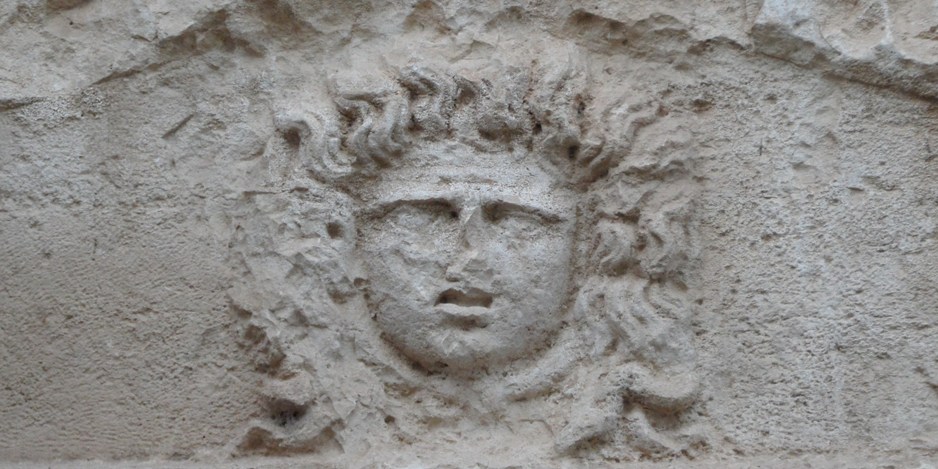
Photo of a carved face within a ruin in Olympos

Olympos, Turkey

Today I headed down the beach by foot towards the Lycian Way, a series of trails that have been the “roads” of ancient civilizations dating back earlier than 350 BCE (pre-Hellenistic era).  Just a few kilometers past Cirali is a small river with crystal clear water flowing from a valley nestled within the Taurus Mountains, which are mostly covered in a blanket of pine trees & rock formations.  This whirling little stream, that is seemingly uncontaminated as there does not appear to be any discharge of grey or black water or any garbage, flows out into the Mediterranean Sea.  The mouth of this little river is the entrance into the valley, and the ancient lost city of Olympos.  Little was known, and much still unknown, about the city of Olympos until about 1990 when the government of Turkey began to explore.  Along the banks of the river are the remnants of civilizations lost over the past 3,000 years – and still granite arches stand tall and tombs remain untouched.  Young tree saplings, ferns, and vines have managed to find elements of life (water, soil, & sun) in the cracks and crevices of the ancient building blocks.  The power of nature, in this case natural succession, is quite remarkable.

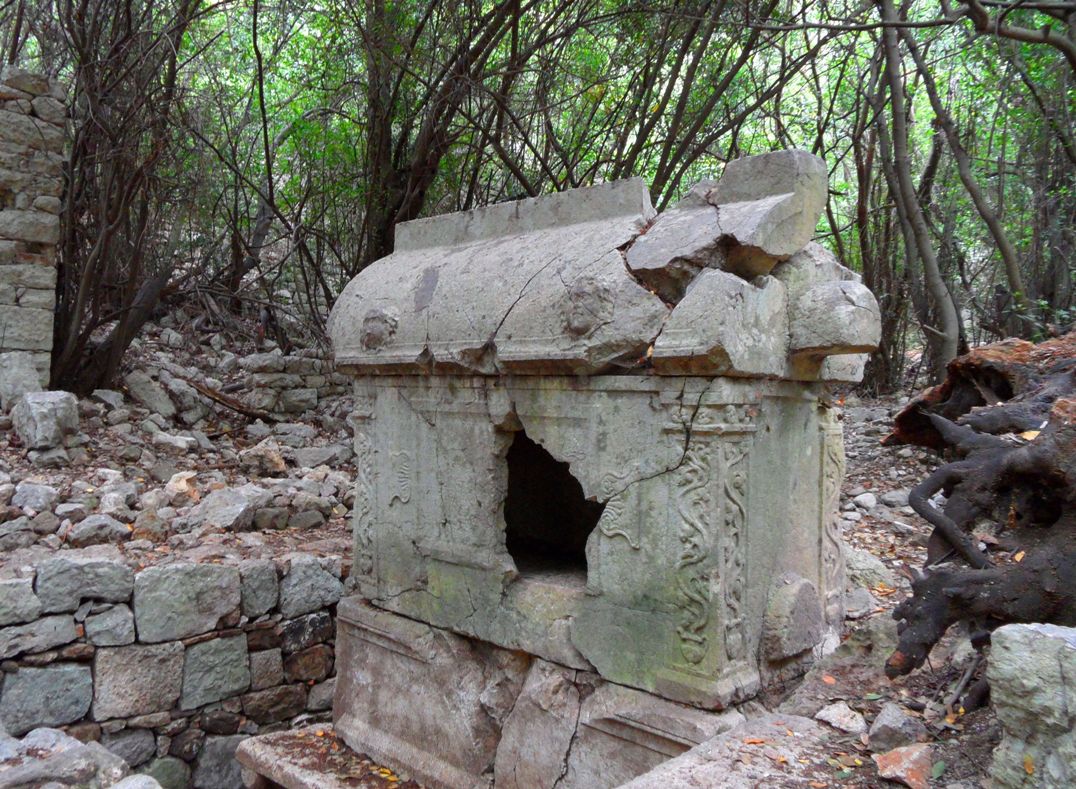
Ancient unearthed sarcophagous

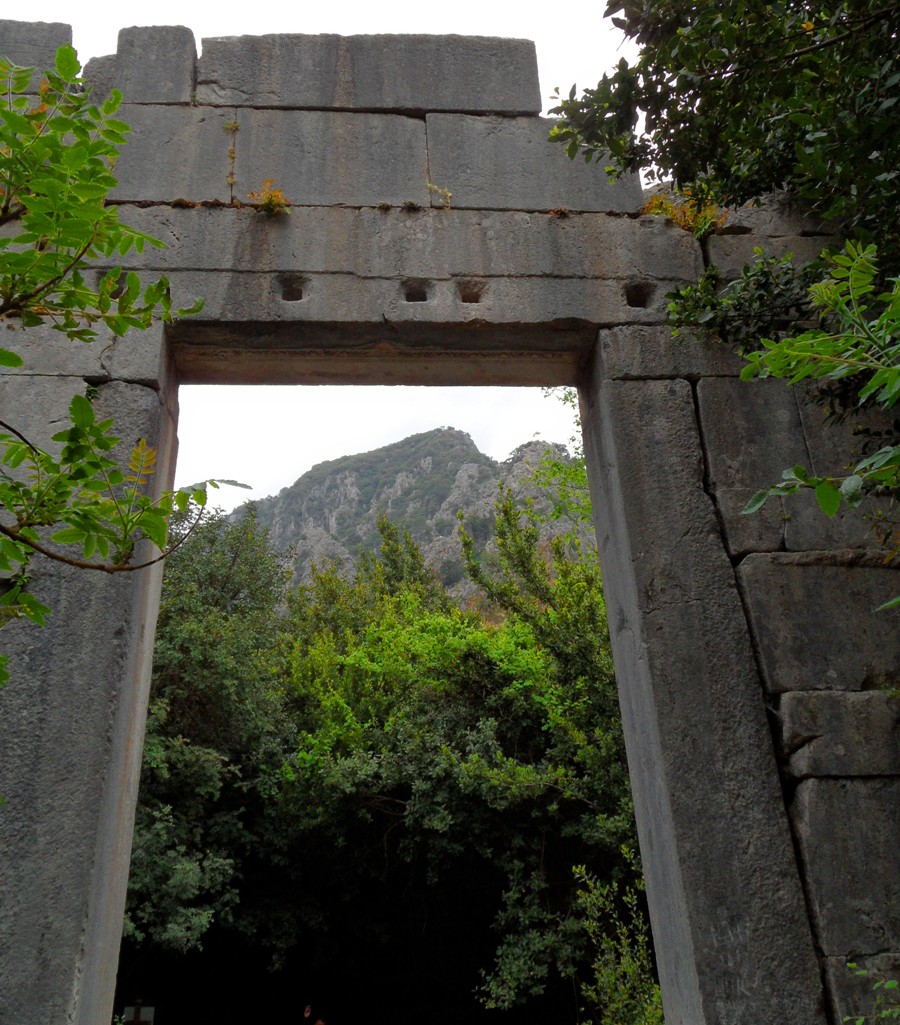
As I meandered through the forest, I could hardly believe what was before more.  On the ground lie pieces of fallen columns intricately carved with scrolls and other decorative design, all weathered by time and the elements.  It could almost be a scene from an Indiana Jones movie, but it’s not – what lays before my eyes is real, I can touch it, feel it, and smell it.  I stumbled by a pre-Hellenistic stone sarcophagus resting on the forest floor.  It had a hole in the front of it, as most that are unearthed do, from grave robbers long ago.  Maybe it was the pirates? Or the Greeks? Or the Romans? In these bits of unknown history lies the mystery.  I continued on and found the ruins of one of the first Christian Churches (Byzantine) known in the region, and still this dated back to the 5th century CE.  I walked along the “floor” inside this ancient house of worship and it came to life in my mind – these walls held a place of devotion for many people.  I could envision people walking around the church, wearing sandles and simple clothing.  And next thing I knew I found my way to a Roman Temple, and quite possibly even pre-Roman era.  Hidden among trees and other flora, was the towering entrance way to this even more ancient spiritual place.  This “temple” pre-dates nearly all known recorded history of religion.  I couldn’t help but stop and marvel in its grandeur and intelligence.  Yes, intelligence.  The Romans, and pre-Romans, were truly masterful in how they cut, created, and assembled each of the massive marble blocks into solid structures.  And their refined building skill actually reminded me of the precision and detail held by the ancient Mayas in Tikal (2000 BCE to 900 CE) and the Incas in Machu Piccho and other sites (400-1500 CE).  Could this temple be the house of Zeus – Master of Olympos?  I will never know and that in itself is the magic in this place.

Color photo of an ancient temple with the Taurus mountains through the doorway

After several hours exploring Olympos and the Lycian Way I continued on wards into the “modern” village of Olympos.  And to my surprise it was a haven for young Turkish teens escaping the cities for the weekend – in a very rustic way I might add.  Along just one side of the small dirt road were a few tree houses, pansyiones, and basic traditional eateries – yes tree houses and how cool! much like the kind we build for our kids in our backyards.  I crossed over the river by foot to check out the less accessible ruins and came across a lot of bright red poppies, croaking frogs, and a myriad of unearthed ruins.  I couldn’t help but think that someday our modern cities that we know so well may somehow not withstand our civilization, or perhaps the opposite – that perhaps we will not withstand ourselves, and in effect will become lost cities to future civilizations.  I picture history made in my own “backyard”, the Capital of the US – Washington DC.  Much of our buildings are made of marble & granite, grand with architectural detail borrowed from the pre-Hellinistic era, Greeks and Romans alike.  I do not see this in the near future, and even if I did, It is not necessarily a bad thing, afterall evolution is a natural process – much like succession in the forest.  The real question is, what lessons will we ensure are carried forward from this life & era to the next?

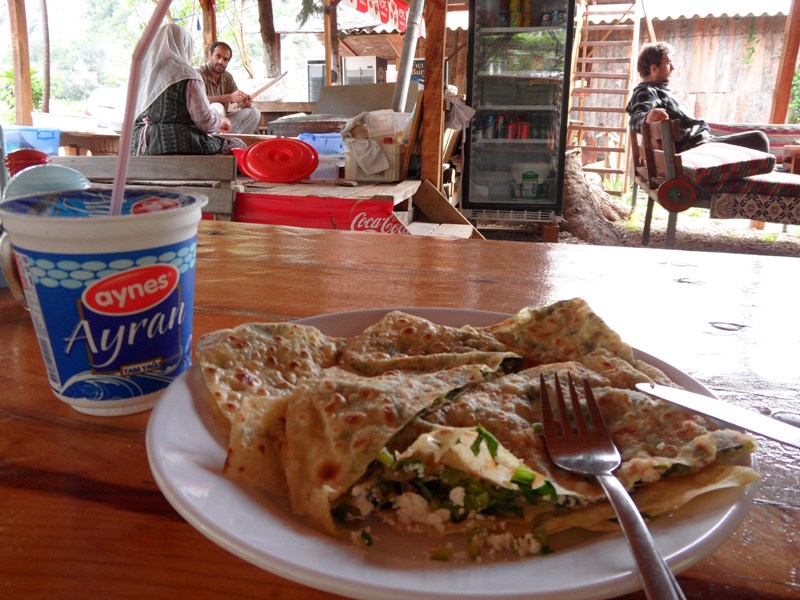
Realizing the sun was going to set in about one hour, I started to head back and stopped at one of the little huts serving fresh food and drinks.  Realizing how little I’ve shared with you about the food so far, it’s about time I give you some detail.  I stopped at a place serving Turkish tea and Gozleme.  I sat at a small wooden table and before me was the kitchen.  A wooden platform hosted a large dome-like metal cooking structure (I think it was heated with hot coals or something of the like), 2 wooden circle tablets, and 3 people – 2 women prepared the Gozleme dough and one male handled cooking it on the dome cooking structure.  The two women, one in her 50s and the other one in her 70s or 80s, sat Indian style in front of the wooden circle tablets preparing the dough.  One formed the dough into round balls while the other use a wooden stick to roll the dough out into perfectly-uniform paper thin pancakes.  She carefully placed the filling of choice (in my case fresh spinach & feta cheese) on one half and then closed the extra thin pancake in half forming something resembling a quesadilla but only better.  She then rolled this filled pancake up on the wooden stick and placed it on the metal dome cooking structure.  The man carefully watched my Gozleme cook for a few minutes on each side, turning it with a flat wood tool.  He then cut it up into four piping hot pieces and vwalah!  Divinity on a plate served with cold natural yogurt milk (Ayarn) to wash it down – another typical Turkish beverage – all for less than 5 bucks.  What made it even better? Well from my seat I could see the family’s garden plot where all the lush spinach grew, alongside peppers and arugula, and their goats which they milked to produce the cheese.  Truly and organically from farm to table. What made it modern?  Well they had one refridgerator that kept the Ayarn and a few Coca Colas cold for its customers.  You can’t ask for much more in a day’s journey!

Color photo of the Gozleme experience

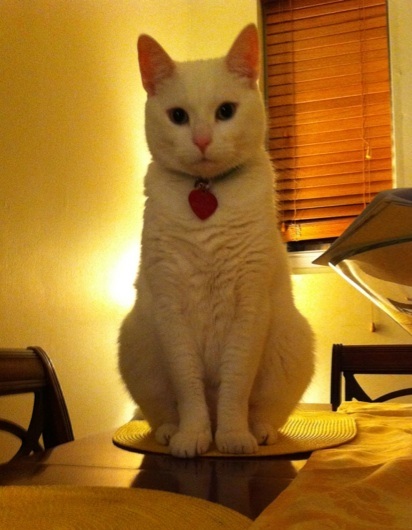
And well, here is my version of a modern-day Zeus.  Equally grand in his own demeanor.  Blessings to my animal kingdom at home.

Color photo of my Zeus